IDEAS / Marketing
Balancing AI Innovation and Regulation for Financial Marketers

After returning from this year’s AI conference in San Francisco and having a week to digest the heady, deeply technical, at times in-the-weeds, and ambitious sessions, I was struck by the binary nature of the talks. The vast majority fell into one of two camps. The first was automation: robots, efficiency, speed, and productivity. The second was human advancement: what AI can help us overcome as humans, such as creating interventions for brain health or saving the environment.
What most sparked my imagination, and what feels like the next frontier for AI, was largely missing: the empowerment of human agency. Apart from a few speakers, there was little about how AI can expand what we become as humans. Learning, creativity, authorship, expression, the ability to shape our own lives.
The distinction is an interesting one. Human advancement is about changing the constraints of being human, whereas self-authorship is about changing the trajectory of your life. That feels like fertile territory, worth deeper interrogation by engineers, designers, and entrepreneurs.
It is also urgent, because agency comes with a cautionary tale. AI, with its speed and coherence at scale, is already outpacing us. If we allow ourselves to outsource our thinking to it, we will in effect be sacrificing our autonomy and our development as a species. This is a particular concern for the generation coming of age in the era of AI.
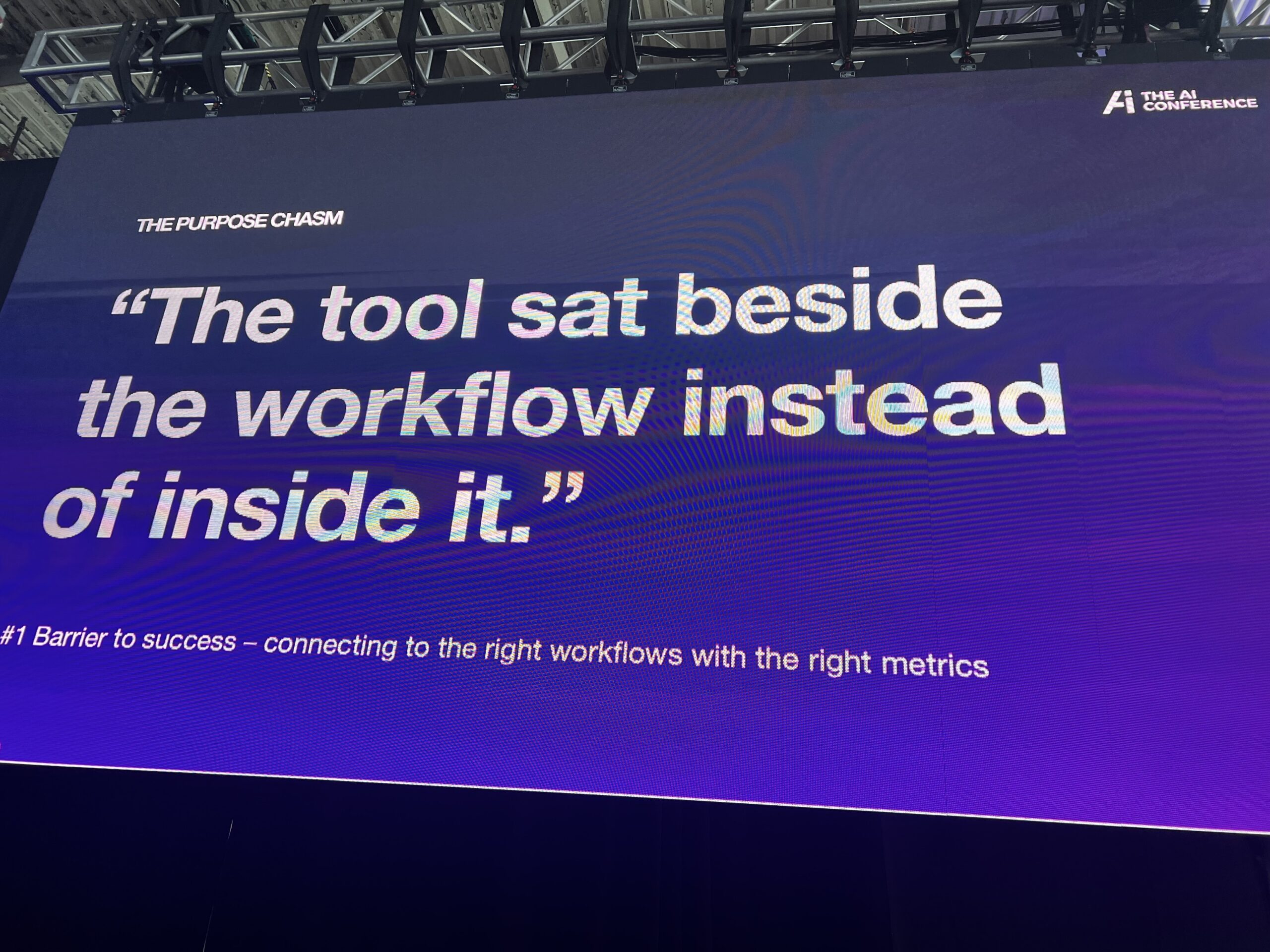
Automation and efficiency are attractive, and they are the easier problems to solve. Agency, as in self-authorship, is hard. It requires a deep understanding and exploration of the human condition, and real subject matter expertise to build for. One speaker described a failed product this way: “the tool sat beside the workflow instead of inside it.” The same is true of our lives. A financial literacy app that sits beside the moment you sign a loan is homework. One that sits inside that moment changes the decision.
The effectiveness of agency is not measured in cures or time saved. It is measured in personal growth, autonomy, independence, and optimism. Think about how students and parents could find the right school for their kids rather than the highest-ranked one. Or how, when dealing with health issues and insurance companies, we could be our own advocates. These are problems I have worked in and around for my entire career, and they are the tip of the iceberg when it comes to not just eliminating barriers for people but truly empowering them to take control of their lives.
A few speakers showed what this can look like.
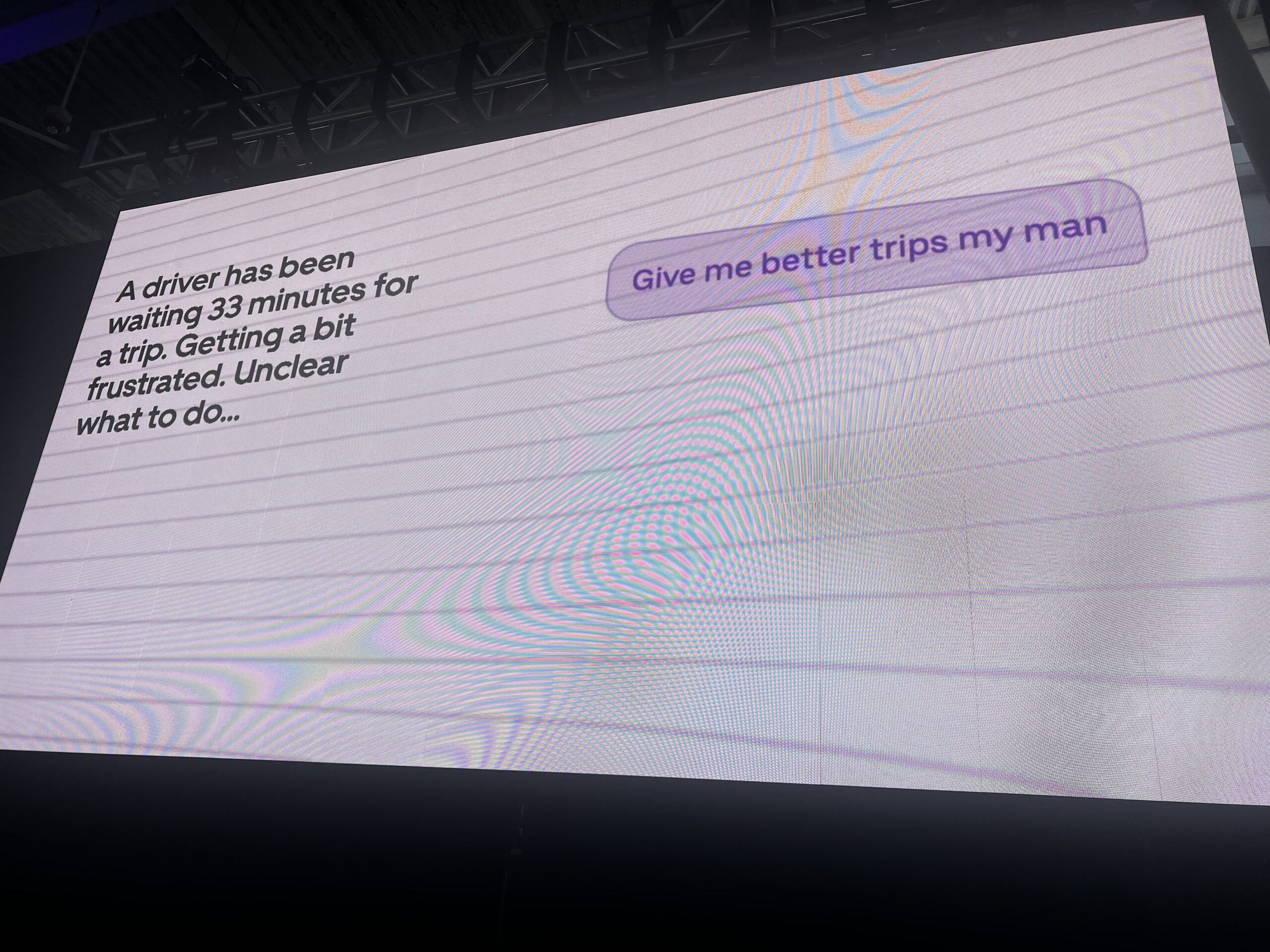
Dharmin Parikh and Himaanshu Gupta of Uber led one of the most grounding conversations of the week. They didn’t open with metrics or data. They opened with the people doing the work. Their question: what would it look like for AI to be on the driver’s side, not the corporation’s? How do we build tools that help drivers get more out of their day and have more say over their lives.
Jaclyn Konzelmann, Product Director at Google Labs, shared a deeply personal account of how self-authorship can be empowered “when AI can actually do things.” She brought the idea to life through the story of how she and her daughter took an idea for a children’s book from concept to reality with a suite of AI tools, stripping away the traditional guardrails along the way. Her takeaway: it is better to keep the lessons than the prototypes.
Max Brodeur-Urbas started his talk with this very idea, stating that “the person who understands the task should be the one to automate it.” Gumloop’s no-code platform lets employees without engineering skills build AI agents and automated workflows. While the output lands in efficiency, its development puts authorship squarely in the hands of the people who own the critical thinking required to be most effective in their jobs.
A driver with more say over her day. A mother and daughter making a book together. An employee automating the work she understands better than anyone. None of these fits neatly into the automation camp or the advancement camp. In each one, AI does not replace the person or fix the person. It leaves the person as the author.
That is the third camp, and it will not build itself. Efficiency has a business case and breakthroughs make headlines, but agency has to be a design choice, made on purpose and made early. So instead of asking people to outsource their agency, let’s place self-authorship at the center of how we design and develop what comes next. The question I would like to hear from more stages next year is not only what AI can do for us, but what it helps each of us become.

